Los Angeles County · CA

Property Inspection in Calabasas, CA

A&A Property Inspections provides home & commercial inspections plus mold, radon, lead, and air-quality testing across Calabasas and surrounding Los Angeles County neighborhoods including The Oaks, Hidden Hills-adjacent, Mountain View Estates. Master-certified, licensed, and insured.


As Seen On
  • NBC News
  • CBS News
  • FOX News
  • USA Today
  • Good Morning Marco

Inspecting Homes in Calabasas

Calabasas sits in the western Santa Monica Mountains, where hot dry summers (95-105°F in July and August) and cold winter nights drive heavy condensation cycles on the poorly-insulated 1980s-90s tract construction that fills much of the city. The gated communities (The Oaks, Mountain View Estates) feature large irrigated landscapes where overspray and broken sprinkler heads can saturate slab edges for years before anyone finds the source — a classic moisture-and-foundation finding. Old Topanga-adjacent properties carry wildfire history from the 2018 Woolsey Fire. A full inspection here reads grading and drainage, the slab and foundation, roof and attic, and HVAC and electrical alongside moisture and radon testing.

What Our Inspectors Find in Calabasas

Irrigation and drainage are the dominant Calabasas variables. A sprinkler head that misted a foundation for two years can push slab-edge moisture well past 25 percent, and once it migrates through a hairline crack into a wall cavity it works unseen for months. The fix starts with finding it — which is why grading, drainage, slab condition, and moisture mapping belong in the same inspection as the roof, systems, and environmental testing rather than being chased one symptom at a time.

Neighborhoods We Serve in Calabasas

  • The Oaks
  • Hidden Hills-adjacent
  • Mountain View Estates
  • Calabasas Park Estates
  • Old Topanga

ZIP codes served: 91301, 91302.

Our Services

From initial inspection to complete remediation, we handle every step with physician-level care and precision.
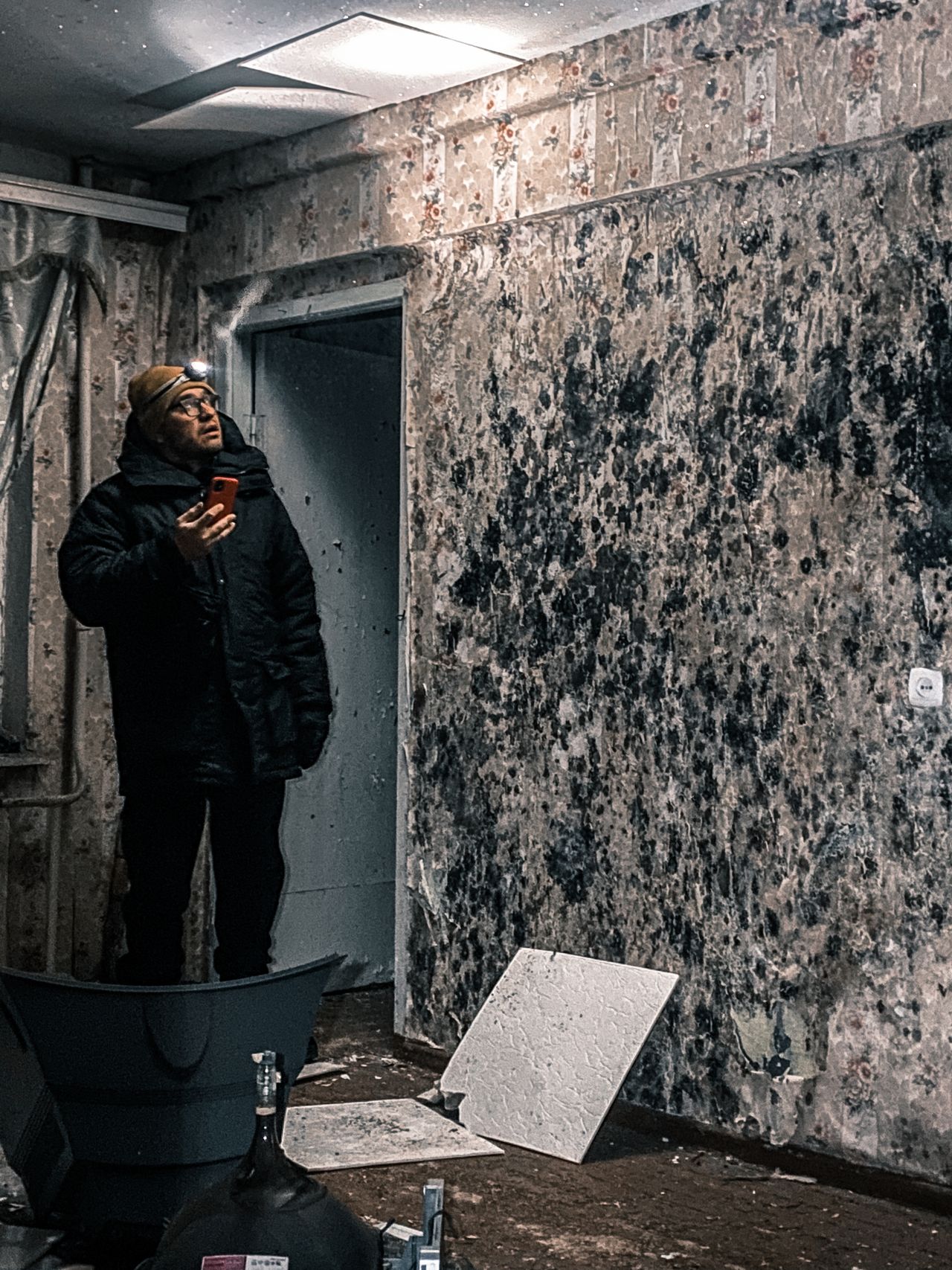
Inspector examining a property with a flashlight — representative inspection scene (Pexels).

Home & Commercial Inspection

A full visual inspection of the structure, roof, and systems — with a full-color, next-day report and clear next steps. Residential and commercial.

Laboratory analyst examining a sample through a stereo microscope — representative environmental-testing scene (Pexels).

Mold, Radon & Lead Testing

Environmental testing for what you can’t see — mold, radon, lead, and indoor air quality — with lab analysis from an independent, accredited laboratory.
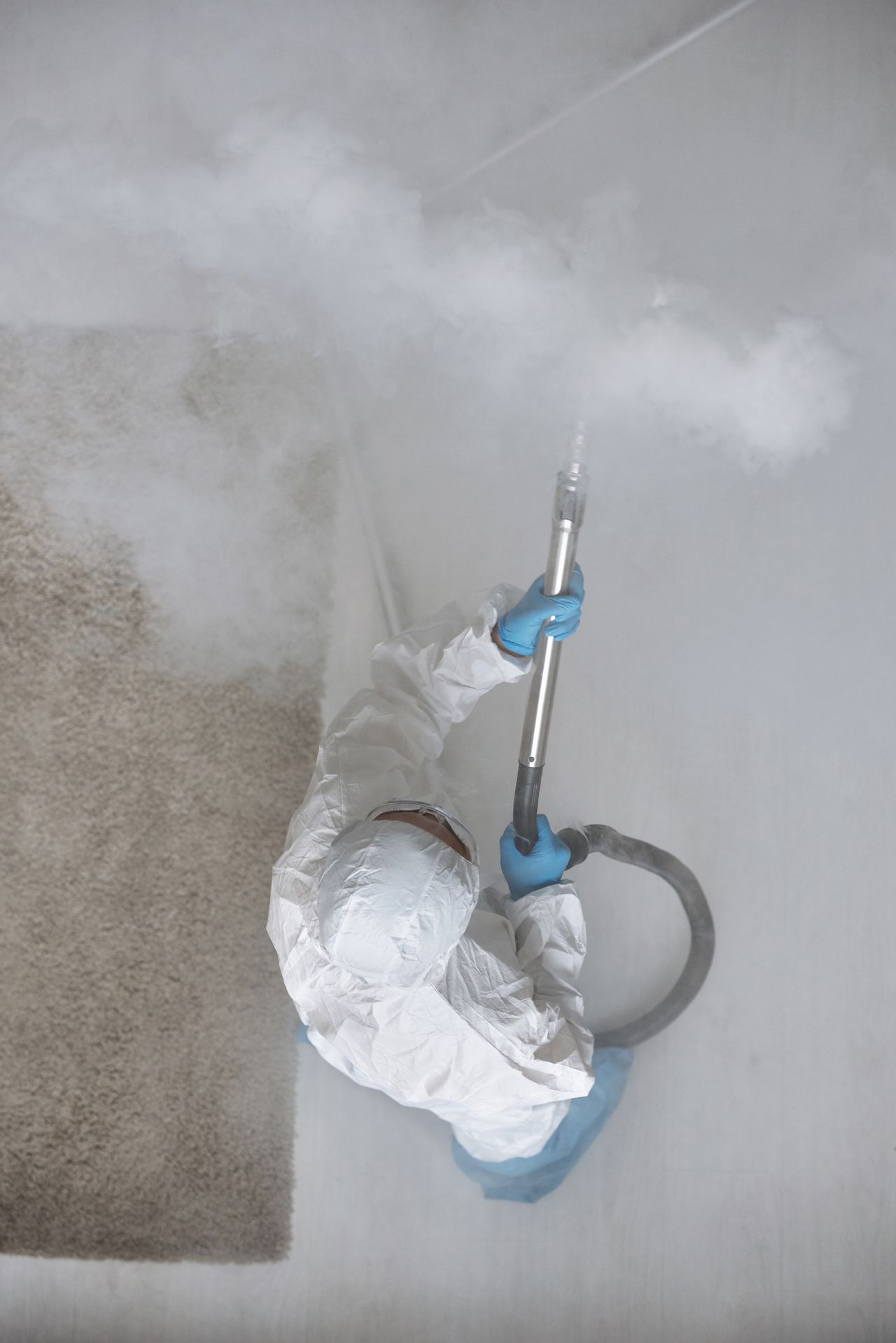
Technician in PPE treating an indoor space — representative remediation work (Pexels).

Remediation & Restoration

When something turns up, we handle it — mold removal and remediation plus water-damage restoration, with before/after documentation.

Types of Mold We Identify and Remove

We test for 19 mold species and spore categories — the same panel an AIHA-accredited environmental lab reports on every spore-trap. The six most common indoor species are shown first; expand the panel below to see every category we test for.

Black Mold

Stachybotrys chartarum

Often labeled "toxic black mold" — produces mycotoxins linked to respiratory irritation, chronic coughing, and worsened allergies in sensitive individuals. Removal should be done by certified, fully suited professionals.

Where it's found
Drywall, ceiling tiles, and wood that has stayed wet for 7+ days — typically after a roof leak, slab-leak, or hidden plumbing failure. Memnoniella, a closely related genus, is grouped with Stachybotrys on most lab reports.
What it looks like
Dark green-black, slimy or wet appearance when active.
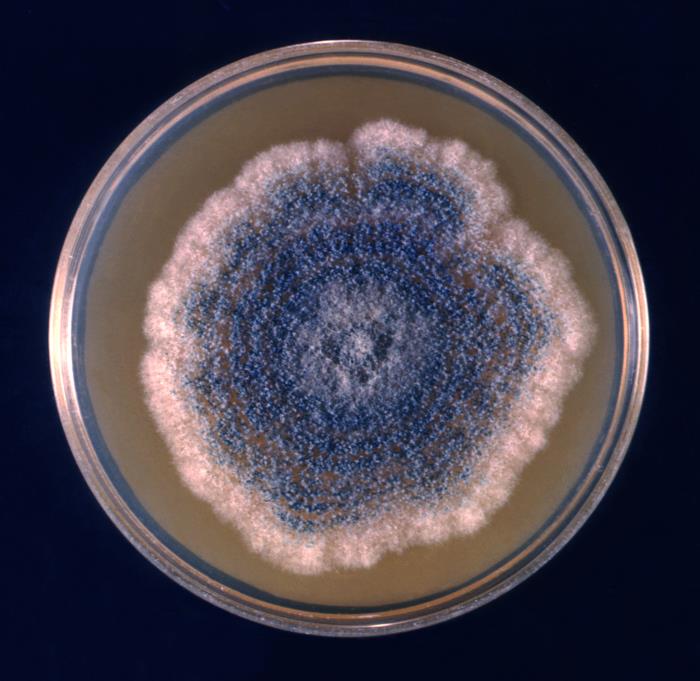
Aspergillus clavatus colony on a petri dish (CDC Public Health Image Library, public domain) — a representative culture of the Aspergillus genus most commonly isolated from indoor air.

Aspergillus

Aspergillus spp.

One of the most common indoor molds. Most species are harmless to healthy adults but can trigger asthma, sinus infections, or aspergillosis in immunocompromised individuals.

Where it's found
HVAC systems, damp insulation, food, leather, paper. Loves warm humid air — a near-constant concern in humid indoor environments.
What it looks like
Yellow, green, brown, or black powdery patches; often fuzzy at the edges.
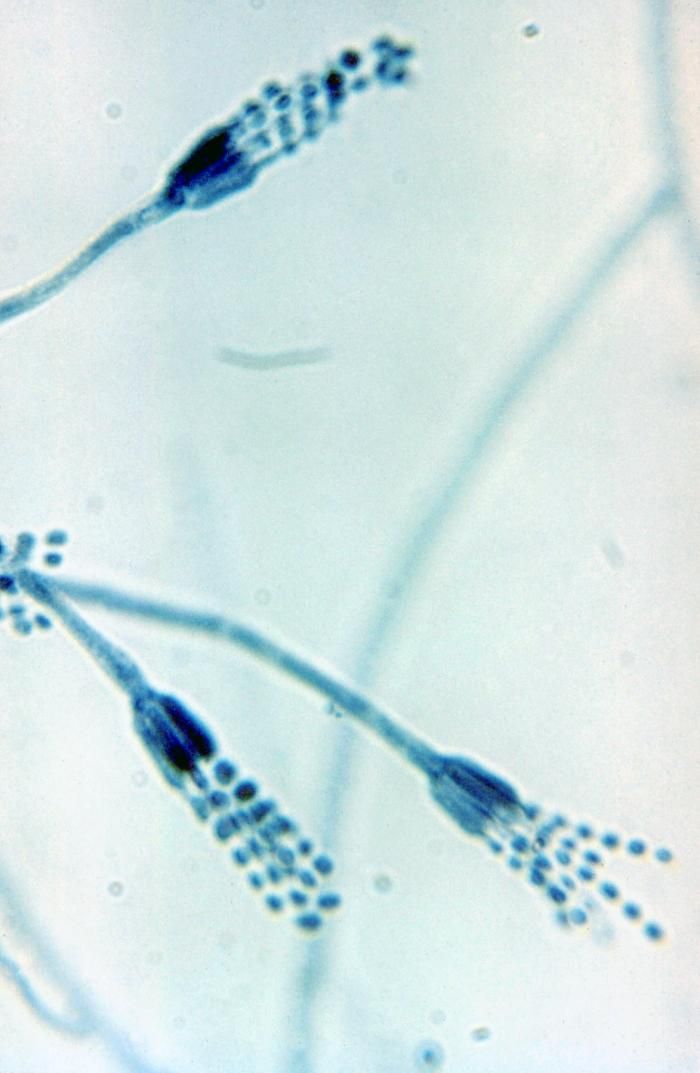
Photomicrograph of Penicillium conidiophores (CDC Public Health Image Library, public domain) — the brush-like spore-bearing structures characteristic of the Penicillium genus.

Penicillium

Penicillium spp.

Common allergy trigger. Continuous exposure can worsen asthma and cause chronic sinus inflammation. Some species produce mycotoxins on water-damaged building materials.

Where it's found
Water-damaged carpets, wallpaper, mattresses, and fabric. Frequently appears within 24–48 hours of a leak.
What it looks like
Blue-green or grey powdery patches; smells musty.

Cladosporium

Cladosporium spp.

Triggers hay-fever-like symptoms, asthma flares, and skin rashes. Tolerates cool temperatures, so it can grow even in refrigerators and AC drip pans.

Where it's found
Bathrooms, kitchens, basements, HVAC drip pans, behind toilets, on shower grout.
What it looks like
Olive-green to black; velvety or suede-like texture.
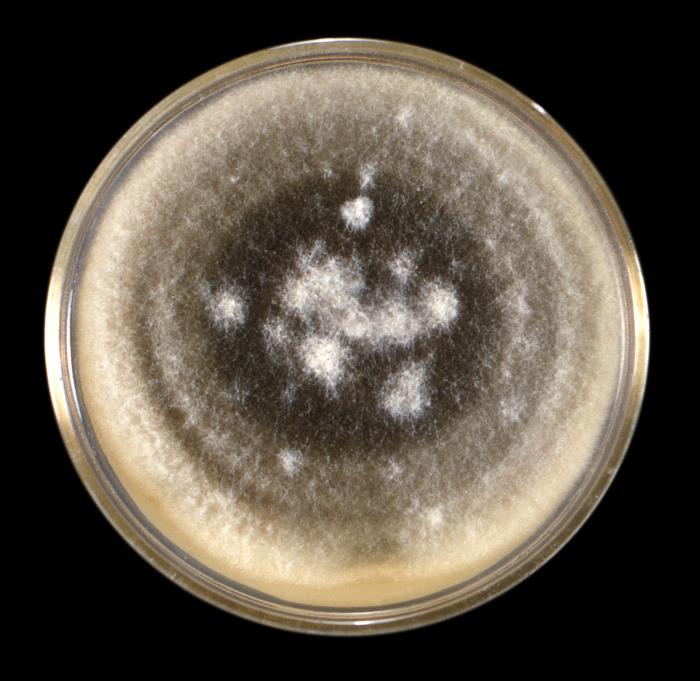
Alternaria sp. culture on Sabouraud dextrose agar (CDC Public Health Image Library, public domain) — the woolly grey-green to olive-brown colony this genus forms.

Alternaria

Alternaria alternata

One of the most well-known asthma triggers — outdoor exposure is normal, but indoor growth concentrates spores and can drive severe respiratory reactions in sensitized people. Ulocladium, a visually similar genus, is grouped with Alternaria on most lab reports.

Where it's found
Window seals, shower stalls, around tubs, under sinks. Wherever condensation lingers.
What it looks like
Dark grey-green or brown; wool-like or velvety.

Chaetomium

Chaetomium globosum

A water-damage indicator species — its presence almost always means a hidden long-term moisture problem. Can produce mycotoxins; linked to allergic and neurological symptoms.

Where it's found
Behind drywall and under wood floors that experienced flooding or a sustained leak.
What it looks like
Starts white and cottony, then matures to grey, brown, or black.

Not sure what you're looking at? Request a free inspection — we'll test, identify, and remove any species we find.

Frequently Asked Questions

Answers to the questions Calabasas homeowners ask most often about property inspection, environmental testing, and what to do first when something turns up.

How much does mold inspection and removal cost?
A standard mold inspection runs $400-700 depending on home size and the number of air samples taken. Full remediation is highly variable — a single contained area might be $1,500-3,500; whole-house remediation after a flood can exceed $15,000. We provide a written quote after the inspection and never charge for the quote itself.
How long does mold remediation take?
Most single-room remediation jobs take 1-3 days from containment setup to clearance testing. Whole-house projects after major flooding or a long-running slab leak can run 1-2 weeks. The lab turnaround for the final clearance air sample adds 2-3 business days regardless of project size.
Is black mold actually dangerous?
Stachybotrys chartarum ("black mold") produces mycotoxins that can cause respiratory irritation, chronic coughing, headaches, and worsened allergy/asthma symptoms — especially in children, the elderly, and immunocompromised individuals. Healthy adults often tolerate brief exposure, but living long-term in a home with active black mold is a documented health risk. Always have it removed by a certified professional, not a DIY scrub.
Does homeowners insurance cover mold removal?
Most homeowners policies cover mold remediation only when the mold resulted from a "covered peril" — a burst pipe, sudden HVAC leak, or sudden water intrusion within the policy window. Long-term neglected leaks and humidity-driven mold are usually excluded. We document the cause and timeline in our inspection report, which insurance adjusters use to make the coverage decision.
What are the health symptoms of mold exposure?
Common symptoms include persistent cough, sinus congestion, headaches, watery or itchy eyes, skin rash, and worsened asthma. Less commonly, prolonged exposure to toxigenic species causes fatigue, brain fog, and joint pain. Symptoms that improve when you leave the house and return when you come back are a strong indicator that something in the home is the trigger.
Can I clean up mold myself with bleach?
For small surface spots (under 10 square feet) on non-porous surfaces like tile or glass, soap and water is sufficient — bleach is unnecessary and can damage grout. Never DIY anything on drywall, ceiling tiles, insulation, wood subfloor, or HVAC components. Scrubbing aerosolizes spores throughout the house; without proper containment and HEPA filtration, you spread the problem instead of solving it.
Do I need to leave my home during mold remediation?
Usually no for small contained projects — we set up negative-air containment that keeps spores inside the work zone. For larger remediation, HVAC remediation, or remediation in central living areas, we recommend a hotel stay for 2-4 days. Immunocompromised people, infants, and pregnant women should always relocate during active remediation regardless of project size.
Should I get a mold inspection before buying a home?
Yes — especially where coastal humidity, aging housing stock, and slab-on-grade construction all elevate mold risk. A pre-purchase mold inspection costs less than 0.1% of a typical home price and can either confirm the home is clean or give you negotiating leverage on the seller credit. We can usually inspect within the standard 10-day inspection window.
What should I do first if my home flooded?
Extract standing water within 24 hours, then run dehumidifiers and fans continuously. Pull baseboards and cut drywall 12-18 inches above the waterline so the wall cavity can dry. Call a mold inspector within 48-72 hours — that is the timeline at which Stachybotrys can colonize wet drywall. The longer you wait, the more aggressive the remediation will need to be.
What is clearance testing and do I need it?
Clearance testing is a post-remediation air sample taken with the containment still in place, sent to an independent AIHA-accredited lab. It is the only objective way to confirm the work was successful. We strongly recommend it for any project larger than 10 square feet and consider it mandatory before re-occupying a remediated space.
How fast can you come out for an inspection?
Most inspections are scheduled within 2-3 business days. Flood and water-damage emergencies are prioritized — we keep a same-day or next-day slot reserved for them during the rainy season. Call 949-529-2121 to schedule or request a quote through the form on this page.
What happens during a mold inspection?
A certified inspector walks the entire property, checking moisture-prone areas (bathrooms, kitchens, attics, crawlspaces, around HVAC) with a moisture meter and thermal camera. We collect a minimum of 3 air samples — one outdoor reference and at least 2 indoor — plus surface swabs of any visible growth. Samples go to an AIHA-accredited lab; you get a written report with the remediation protocol within 5-7 business days.
What is radon and why does it matter in California homes?
Radon is a colorless, odorless radioactive gas produced by the natural decay of uranium in soil and bedrock. It enters homes through foundation cracks, plumbing penetrations, and crawlspace openings, then concentrates indoors. The EPA links long-term radon exposure to about 21,000 lung-cancer deaths a year in the United States — second only to smoking. Parts of Los Angeles, Orange, and San Bernardino counties fall in EPA Zone 2 (moderate potential).
What is a safe radon level — and when do I need mitigation?
The EPA action level is 4.0 picocuries per liter (pCi/L); the World Health Organization recommends an even lower 2.7 pCi/L. Below the EPA threshold, no action is required but a follow-up test in 2-5 years is recommended. At or above 4.0 pCi/L, mitigation (typically sub-slab depressurization) is strongly advised. Mitigation cost in the LA area runs $1,500-3,500 for a typical single-family home.
What is EPA RRP certification and does my contractor need it?
The EPA Lead Renovation, Repair, and Painting (RRP) rule requires that any contractor disturbing painted surfaces in pre-1978 homes hold firm-level certification AND employ certified renovators on the job. California adds a separate CDPH Lead-Related Construction Inspector certification for testing work. Both are non-negotiable for legal lead work in California — ask for the firm certification number on the contract; the EPA maintains a public lookup at epa.gov.
How is lead-based paint tested in a California home?
Lead paint is tested non-destructively with an XRF (X-ray fluorescence) analyzer that reads paint composition through the surface, plus targeted paint-chip samples sent to an accredited lab for the layered cross-section. We also dust-wipe sample window sills, floor edges, and any disturbed areas where lead-dust accumulates — these readings drive the EPA's risk classification. Reports include each room's lead status and any mandatory abatement work under California Title 17 if the home was built before 1978.
What does a California home inspection cover?
A California Real Estate Inspection Association (CREIA) Standards of Practice inspection covers the visible and accessible structural, electrical, plumbing, HVAC, roof, exterior, interior, and built-in appliance systems. The inspector documents conditions but does not estimate repair costs. California does not require state-level home inspector licensing (unlike many states), so CREIA Standards of Practice + InterNACHI Certified Professional Inspector status are the credibility markers to look for. Inspections take 2-4 hours on-site; the written report arrives within 24-48 hours.
Do you offer radon, lead, and home inspection in addition to mold services?
Yes. In addition to mold inspection and remediation, our California operation provides radon testing, lead testing, moisture and indoor-air-quality testing, and full home and commercial inspections. That means a single visit can cover several environmental concerns at once, with lab work handled by an independent accredited laboratory. If you need a service we do not provide, we are happy to refer you to a licensed specialist.
What does a commercial property inspection cover?
A commercial property inspection covers the building structure, roof and roof-mounted equipment, the exterior envelope, commercial electrical service, plumbing supply and waste, every HVAC unit, water heaters, and visible fire-and-life-safety features, plus the site, parking, and drainage. It is a condition assessment, not a code inspection — the report documents what is present, its condition, and its remaining service life so a buyer, tenant, or lender can plan. Environmental testing (mold, radon, lead, air quality) can be added in the same visit.
What is the difference between a mold inspection and a mold investigation?
A mold inspection answers whether there is a mold problem and how large it is, using a visual walkthrough and air sampling. A mold investigation goes further and answers why it keeps happening — it traces the hidden moisture source with moisture meters, thermal imaging, and targeted cavity inspection. You want an investigation when mold has returned after a cleanup, when there is a musty odor with no visible growth, or when nobody has been able to locate the water feeding the problem.
What is an allergy inspection and how is it different from a mold inspection?
An allergy inspection focuses on the indoor allergens and irritants that drive symptoms — mold, dust, dander reservoirs, and the moisture, filtration, and ventilation conditions that concentrate them. A mold inspection looks specifically for mold; an allergy inspection looks more broadly at what a sensitized occupant is breathing and where it comes from, then frames the findings so you and your physician can act. It is most useful when someone has allergy or asthma symptoms that flare at home.
What does indoor air quality testing measure?
Indoor air quality testing measures the broad picture of what is in your home air: airborne mold spores and their species mix, particulate load, relative humidity, and the ventilation and HVAC conditions that determine how well the home clears its own air. Samples from the main living areas are compared against a simultaneous outdoor reference at an independent accredited laboratory, so elevated readings are meaningful. It is the right choice when symptoms or concerns are not tied to one obvious culprit and you want to know where to focus.
How does moisture testing find hidden water in a home?
Moisture testing combines pin and pinless moisture meters, which quantify how much water is in wood, drywall, and concrete, with thermal imaging, which reveals cool, damp areas behind finishes that the eye cannot see. Readings are compared against a dry baseline in the same materials, so an elevation is meaningful rather than a guess. The result maps exactly where a building is wet and how wet, which is the prerequisite for a lasting repair and for documenting a water event for insurance.

Don't see your question? Ask us directly — we respond within one business day.

Get Your Free Mold Estimate

Tell us what's going on and we'll get back to you within one business day — free, no obligation.

No obligation. We reply within one business day. Your info is never shared.

Service Area

Beverly HillsSanta MonicaMalibuPacific PalisadesNewport Beach
Call NowFree Estimate